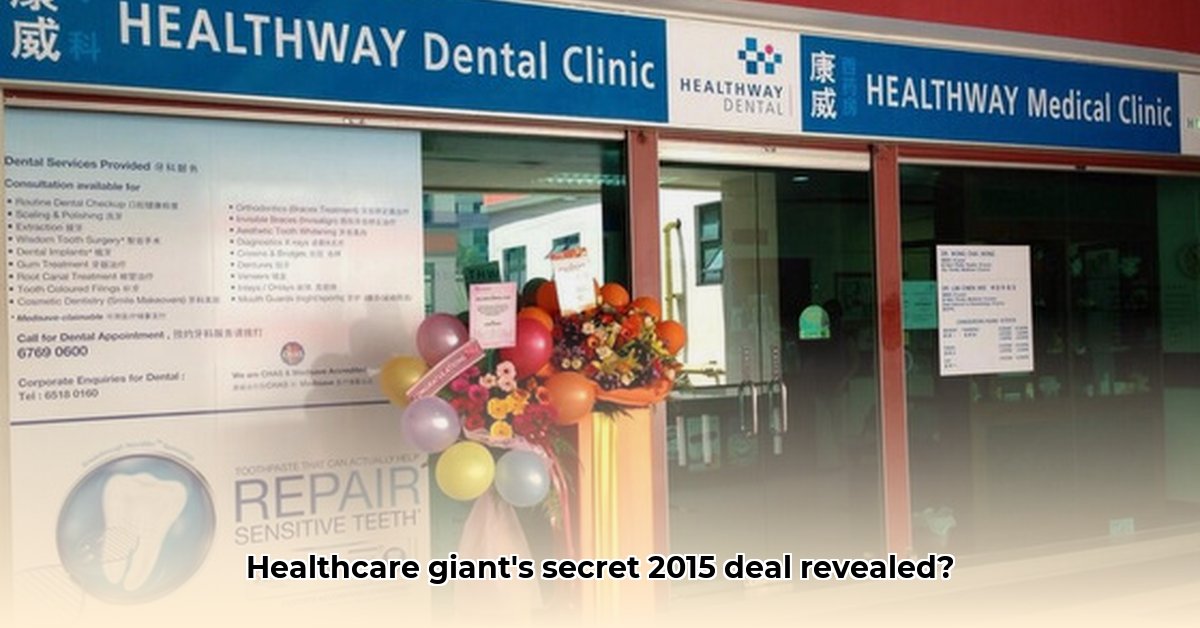
International Healthway Corporation: Unpacking a 2015 Healthcare Deal
The 2015 merger of Healthway Medical Corporation Ltd. into International Healthway Corporation (IHC) presents a compelling case study in healthcare mergers and acquisitions (M&A) within Singapore's complex regulatory landscape. While initially valued at SGD 150 million and structured as a stock swap, the transaction's execution proved significantly more intricate than initially anticipated. This analysis explores the deal's intricacies, challenges, and lessons learned, drawing upon publicly available information. Did the complexity of the regulatory environment fully justify the extended timeline, and what strategies could have improved efficiency?
The Deal's Intricacies: Navigating a Complex Transaction
The acquisition involved numerous complexities beyond the initial stock swap agreement. Securing regulatory clearances from various Singaporean bodies significantly extended the timeline. This highlights the importance of proactive planning and robust legal counsel in navigating the intricacies of Singaporean healthcare regulations. How did the involvement of multiple regulatory bodies impact the overall cost and time to completion?
Navigating Singapore's Regulatory Maze
The acquisition underscored the stringent regulatory environment governing cross-border healthcare deals in Singapore. Obtaining approvals from bodies such as the Securities Industry Council and meeting the Catalist board's listing requirements presented significant challenges. The extended timeline underscores the need for meticulous preparation and experienced legal representation in mitigating regulatory risks. What specific regulatory hurdles proved most challenging, and what strategies did IHC employ to overcome them?
Key Players and Their Roles
Several key players shaped the outcome of the acquisition:
Financial Advisors: Firms likely provided financial modeling, risk assessments, and guidance on navigating regulatory hurdles. Their role was critical in structuring the financial aspects of the deal. What specific financial modeling techniques were employed to assess the viability of the acquisition?
Legal Counsel: Legal firms ensured compliance with all legal and regulatory requirements and protected the interests of all parties involved. Their expertise was crucial in mitigating legal and regulatory risks. What key legal strategies were implemented to ensure compliance with Singaporean regulations?
Data Gaps and Limitations
Despite publicly available information, a detailed financial performance analysis for both IHC and Healthway Medical before and after the merger remains unavailable. This data gap limits a comprehensive assessment of the deal's long-term financial success. Similarly, precise details regarding the revised stock exchange ratio and the ultimate outcome of the acquisition require further clarification. How did the lack of comprehensive financial data affect the assessment of the deal's success?
Stakeholder Interests and Perspectives
The acquisition impacted various stakeholders with diverse interests:
| Stakeholder | Short-Term Goals | Long-Term Goals |
|---|---|---|
| International Healthway Corp. | Due diligence, securing approvals, stakeholder management, integration planning | Post-merger integration, synergy realization, strategic adjustments |
| Healthway Medical Corp. | Securing favorable terms, shareholder approval, smooth transition | N/A (Delisted) |
| Regulators (e.g., MAS) | Efficient review process, transparency, regulatory compliance | Optimizing future healthcare M&A processes |
| Financial Advisors | Financial modeling, risk assessment, regulatory navigation | Post-acquisition monitoring and valuation |
| Legal Counsel | Legal and regulatory compliance, safeguarding stakeholder interests | Streamlining future healthcare M&A transactions |
Risk Assessment and Mitigation Strategies
Successful M&A ventures require robust risk management. For IHC, key risks included: regulatory approval delays; shareholder opposition; post-merger integration challenges; and valuation discrepancies. Mitigation strategies involved proactive regulator engagement, open shareholder communication, detailed integration plans, and thorough due diligence. To what extent did IHC's risk mitigation strategies influence the deal's overall outcome?
Lessons Learned and Future Implications
The IHC acquisition highlights the complexities of healthcare M&A. While the long-term financial success remains partially obscured by data gaps, valuable lessons emerge regarding due diligence, regulatory navigation, and stakeholder management. Further research is crucial to fully understand the deal's financial impact and realized synergies. What specific lessons can be gleaned from this case study for future healthcare M&A transactions in Singapore? What are the implications for other companies considering similar acquisitions?
Mitigating Risks in Singapore Healthcare M&A
This case study emphasizes the critical need for robust risk mitigation strategies in Singaporean healthcare M&A transactions. Although IHC's acquisition ultimately proceeded, the complexities encountered provide valuable lessons.
1. Enhanced Due Diligence: Comprehensive due diligence must extend beyond financial analysis, incorporating a thorough examination of regulatory compliance and cybersecurity protocols. Were all potential liabilities adequately assessed?
2. Proactive Regulatory Engagement: Understanding and anticipating Singapore's healthcare regulations is crucial. Proactive engagement with regulatory bodies can significantly streamline the approval process and prevent costly delays. How effectively did IHC engage with relevant regulatory bodies throughout the acquisition process?
3. Cybersecurity Prioritization: Rigorous cybersecurity assessments are non-negotiable, given the sensitivity of patient data. Breaches can lead to severe financial and reputational damage. Were adequate measures in place to protect patient data both during and after the acquisition?
4. Strategic Cultural Integration: Success hinges on effective cultural integration between merging entities. A well-defined plan addressing employee concerns, training, and communication is essential for minimizing disruption and fostering a unified corporate culture post-merger. What specific strategies were employed by IHC to integrate the cultures of the two companies?
5. Phased Post-Acquisition Integration: A well-structured, phased approach to post-acquisition integration is crucial for minimizing operational disruptions and data losses.
This case study, based on publicly available information, highlights the inherent complexities of healthcare M&A in Singapore. The successful navigation of these challenges requires meticulous planning, proactive risk mitigation, and a deep understanding of the regulatory landscape. Future research focusing on the long-term financial performance and operational synergies would offer invaluable insights.